- Welcome to Our Lab
- +61 7 3138 7195
- m1.haque[at]qut.edu.au
Evaluation of the Targeted Road Safety Program 2005/2006 – 2011/2012 [LTS1819-005]
Grant:
$
268,219
Duration:
Feb 2020 - Jun 2020.
The aim of this project was to evaluate the road safety performance of projects delivered as part of the Targeted Road Safety Program (TRSP) for the years 2005/2006 to 2011/2012. Specifically, this project aimed to evaluate the effectiveness of the TRSP 2005/2006-2011/2012 in reducing casualty crashes and, more specifically, fatal and serious injury (FSI) crashes. From the evaluation of safety effectiveness for the verified TRSP projects, it was concluded that the 357 TRSP projects under consideration for evaluation had an overall statistically significant positive impact on the average number of crash reductions per year, both in terms of total injury and FSI crash types. This project was led by CARRS-Q. STSR-Lab was responsible for developing the methodological frameworks for road safety program evaluation.
Automated Video Analysis of Three Complex Brisbane Intersections: A Safety Evaluation Using Advanced Video Recognition Technology
Grant:
$
99,346
Duration:
Jan 2021 – Dec 2023.
This project aims to balance road safety and efficiency as conflicting goals of transport systems mixed with connected and automated vehicles (CAVs). This project is expected to generate fundamental knowledge on operational algorithms and analytics for CAVs and develop innovative tools for operating them. Expected outcomes include ground-breaking models capable of the co-estimation of efficiency and safety impacts of CAVs, and control strategies to safely and efficiently integrate CAVs into existing transport systems. While this project is led by the University of Queensland (UQ), STSR-Lab is leading the traffic safety component of this project, in which a new traffic safety model for connected and automated vehicles will be developed.
Proactively detecting motor vehicle crash black spots based on their underlying behavioral, engineering and spatial causes.
Grant:
$
171,000
Duration:
Jan 2014 – Dec 2016.
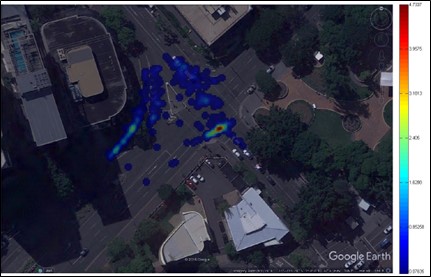
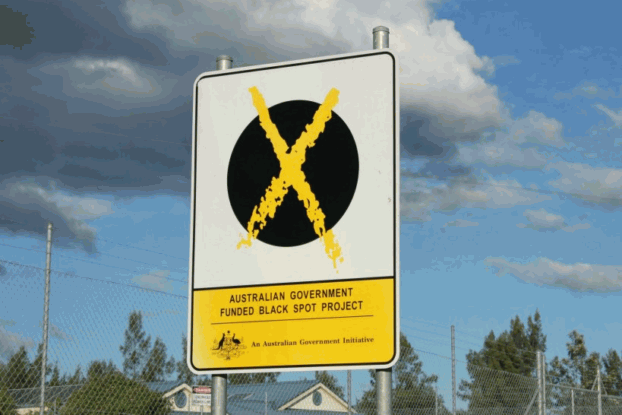
Road traffic crashes are responsible for hundreds of lives and thousands of injuries on Australian roadways each year. A significant research opportunity exists to fundamentally rethink how the profession quantitatively identifies black spots on the transport network. This project aims to develop, test, and validate an evidence-based methodology to proactively detect motor vehicle crash black spots by decomposing (statistically) observed crashes at a site into their engineering, behavioural, and unobserved spatial components. The new methods combined provide novel insights and knowledge regarding transport network safety management.
Can we drive safer and faster? A unified theory for managing road transport systems with traditional, connected and automated vehicles.
Grant:
$
368,488
Duration:
Jan 2021 – Dec 2023.
This project aims to balance road safety and efficiency as conflicting goals of transport systems mixed with connected and automated vehicles (CAVs). This project is expected to generate fundamental knowledge on operational algorithms and analytics for CAVs and develop innovative tools for operating them. Expected outcomes include ground-breaking models capable of the co-estimation of efficiency and safety impacts of CAVs, and control strategies to safely and efficiently integrate CAVs into existing transport systems. While this project is led by the University of Queensland (UQ), STSR-Lab is leading the traffic safety component of this project, in which a new traffic safety model for connected and automated vehicles will be developed.
TMR08018 Video Analytics Trial for the provision of Research and Development Services
Grant:
$
159,000
Duration:
Sep 2019 - Jun 2020.
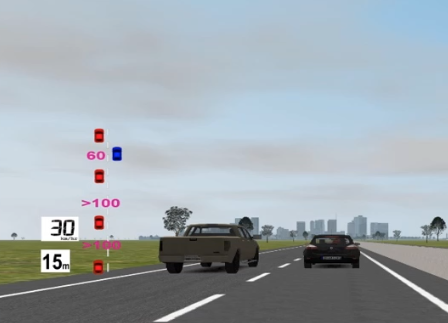
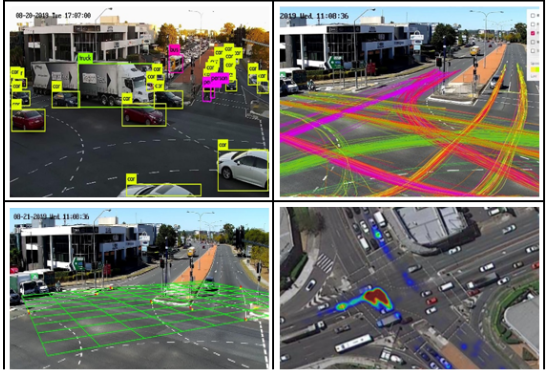
This project sought to undertake and deliver a field trial utilising video-based traffic conflict analysis (video analytics trial) at four sites identified in collaboration with the Queensland Department of Transport and Main Roads (TMR). In particular, this project applied advanced video analysis technology to assess intersection safety performance, with the aim of demonstrating to TMR the value of this technology and corresponding analytical evaluation. This proof-of-concept project for the Queensland Transport and Main Roads successfully demonstrated a number of important utilities of advanced video analytics tools, including
Development of Motorcycle Safety Audit Methodology using Instrumented Motorcycle
Grant:
$
170,000
Duration:
Jun 2018 - Jun 2019.
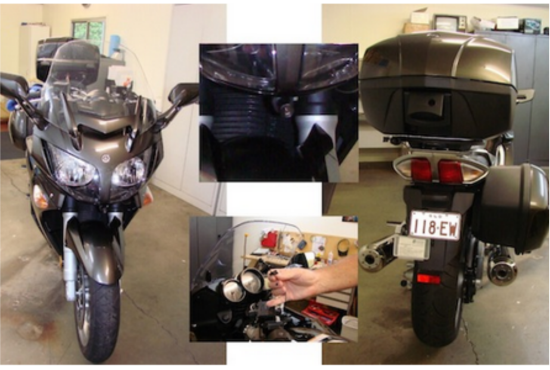
This project aims to develop a new motorcycle-specific safety assessment methodology using the Instrumented Motorcycle. This project develops a guide detailing the motorcycle-specific road safety audit methodology, risk assessment method including Benefit Cost Ratio (BCR) estimation, instrumented motorcycle data analysis and reporting of motorcycle risk. This step-by-step guide will be used to identify risks to motorcyclists. It is expected that the findings of Road Safety Audits using the instrumented motorcycle would help to identify and treat high-risk motorcycle locations.
Evaluation of crash and behavioral impacts of Bruce highway safety treatments
Grant:
$
252,600
Duration:
Aug 2017 - Dec 2022.
The aim of this project is to evaluate the effectiveness of treatments to sections of the Bruce Highway that are scheduled to be constructed as part of the Bruce Highway Safety Package – Tranche 1 (BHSP-Tranche 1), minor safety works that were recommended by route safety reviews of the BHSP-Tranche 1, and projects under the Bruce Highway Upgrade Program (BHUP) that may have foreseeable safety benefits, in terms of reducing the number of crashes, injury severities and cost of crashes at the treated sites. To evaluate the effectiveness of engineering treatments, this project applies the state-of-the-practice before-after evaluation methodology. In particular, the Empirical Bayes (EB) method is applied to evaluate the effectiveness of engineering safety treatments (e.g. wide centre line treatments, shoulder widening, delineation, etc.) along Bruce Highway. The effectiveness of treatments is measured in terms of total crashes, target crashes and injury severity of crashes.
A Novel Real-Time Risk Assessment System for Vulnerable Road Users at Signalized Intersections Using Artificial Intelligence-Based Video Analytics.
Grant:
$
325,500
Duration:
July 2021 – June 2023.
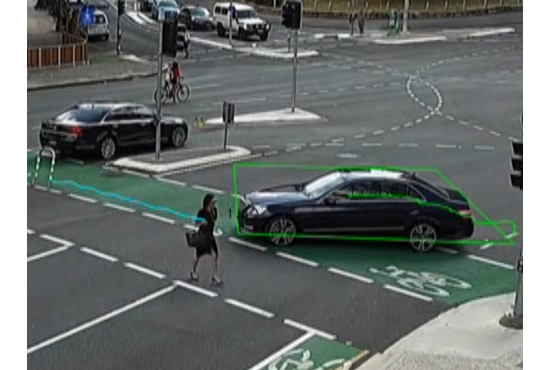
This research aims to develop a new real-time risk assessment system that proactively and efficiently assesses and mitigates crash risks of vulnerable road users (VRUs) by applying traffic conflict techniques and artificial intelligence-based video analytics. This research utilises the power of artificial intelligence technologies in the emerging field of conflict-based safety assessment in an unprecedented effort to develop new technology for the real-time risk management system of VRUs. The proposed real-time safety assessment system for VRUs will contribute to reducing road fatalities and injuries in Australia.
Safety Evaluation of Right-turn Signal Phasing at Signalized Intersections Applications of Advanced Video Analytics
Grant:
$
296,000
Duration:
July 2021 - June 2023.
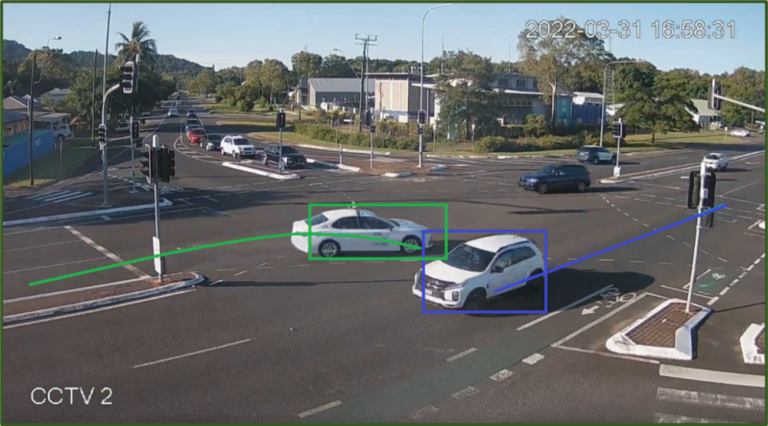
This project aims to undertake a comprehensive safety evaluation of permissive to part-time protected right-turn signals at intersections by utilizing advanced video-based traffic conflict analysis (video data) at a number of sites identified in collaboration with the Department of Transport and Main Roads (TMR). The advanced video analysis technology shall be applied to assess safety issues around permissive (and part-time protected) right-turn signals. As an overarching goal of the project, the relationship between traffic conflicts and historical (annual) crash records at these sites shall be developed to assess the safety and provide recommendations thereafter. The project team shall produce a detailed report describing the results of the automated video analysis of selected sites, revealing potential conflict zones, conflict, violation issues, and the relationship between traffic conflict measures and historical crash records. In addition, this project also aims to study the effects of part-time protected right-turn signals on the queue length of treated approaches.
Our Collaborated Projects
Developing Safety Performance Functions (SPFs) for Queensland's state-controlled road network
Grant:
$
120,000
Duration:
July 2020 – Jun 2021.
Analysis of Heavy Vehicle Crashes on Queensland's state-controlled road network
Grant:
$
60,000
Duration:
July 2019 – Jan 2020.
Study of Travel Behaviour in Queensland Using Behavioural Economics
Grant:
$
90,000
Duration:
September 2019 – Jun 2020.
Pilot study on the development of a practitioners toolkit for signal control performance evaluation and development
Grant:
$
50,000
Duration:
September 2018 – April 2019.
A framework for incorporating Bluetooth trajectory information in OD optimisation
Grant:
$
40,000
Duration:
September 2018 – April 2019.
Distracted driving research program
Grant:
$
86,951
Duration:
May 2018 - Dec 2018.
Research services to develop an evaluation framework for the Mandatory Alcohol Interlock Program (MAIP)
Grant:
$
42,322
Duration:
Mar 2016 – Jun 2016.
Evaluation of effectiveness of road safety billboards on driving behaviour [TMR4216]
Grant:
$
189,473
Duration:
Jun 2016 - Jun 2017.
Independent evaluation of BCC left turn on red (LTOR) trial
Grant:
$
71,147
Duration:
Aug 2016 – Dec 2016.
Improving taxi driver safety with a smartphone feedback system: A pilot study
Grant:
$
101,000
Duration:
May 2014 - April 2015.
Prevalence and perception of following too closely in Queensland
Grant:
$
230,593
Duration:
June 2014 - July 2016.
Distraction and attitudes towards safe pedestrian behavior
Grant:
$
90,000
Duration:
July 2014 to December 2015.
Developing an outcome evaluation framework for the Queensland Alcohol Ignition Interlock program
Grant:
$
45,000
Duration:
Mar 2014 - June 2014.
An In-Depth Examination of Crashes Involving Young Drivers
Grant:
$
91,000
Duration:
Apr 2013- Apr 2014.